The Weightless State: Deconstructing Static Seating - Kokuyo ing Cloud is here.
/Traditional office landscape design has long been dictated by a philosophy of restriction. Standard task seating is historically engineered to brace, lock, and hold the human frame into a series of rigid, fixed positions—an artificial approach that treats comfort as a solved, mathematical equation.
The ingCloud task chair by Kokuyo dismantles this entire paradigm. Born from an intensive eight-year development programme in Japan, the design team set out to completely transcend conventional ergonomics. Their objective was not simply to build a better chair, but to create an object that eliminates the physical sensation of sitting altogether. The experience is conceptualised not as a piece of furniture you use, but as something you wear—a seamless, fluid extension of the body that entirely disappears from your perception during long periods of intense focus.
This fundamental departure from standard design principles recently received the highest level of international validation at the Red Dot Design Awards. Earning an exceptionally rare score of 96 out of 100 in the Innovative Design category, the ingCloud was awarded the prestigious Best of the Best distinction, establishing a new benchmark for high-performance corporate interiors.
The Triple Gliding Architecture
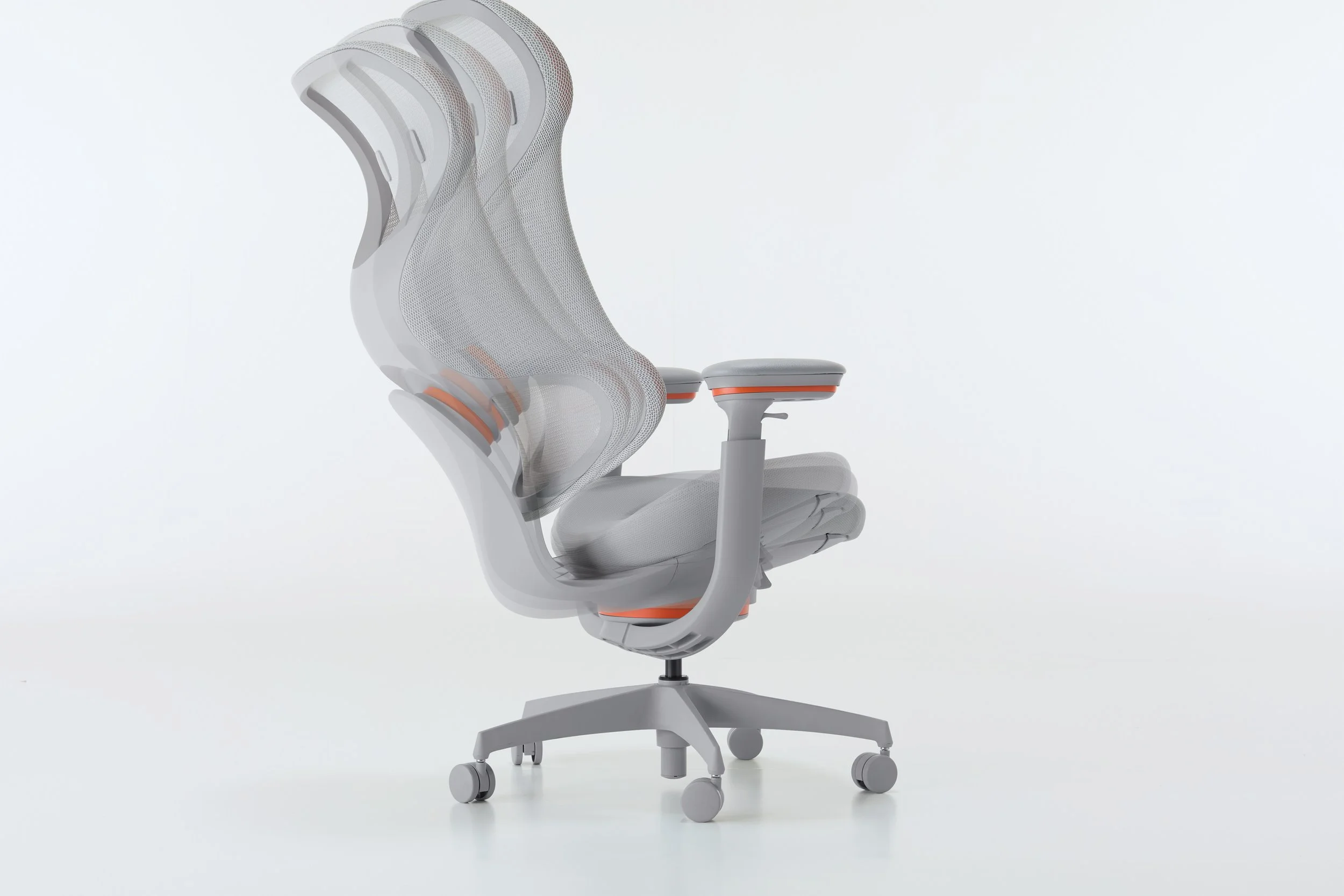
At the centre of this engineering achievement is the proprietary 3D Ultra Auto-Fit Mechanism. Rather than cluttering the silhouette with a complex network of plastic levers and mechanical tension dials, the chair uses the user’s own gravity to counter-balance weight and disperse pressure dynamically the moment they sit down.
The kinetic movement is distributed synchronously across three independent zones:
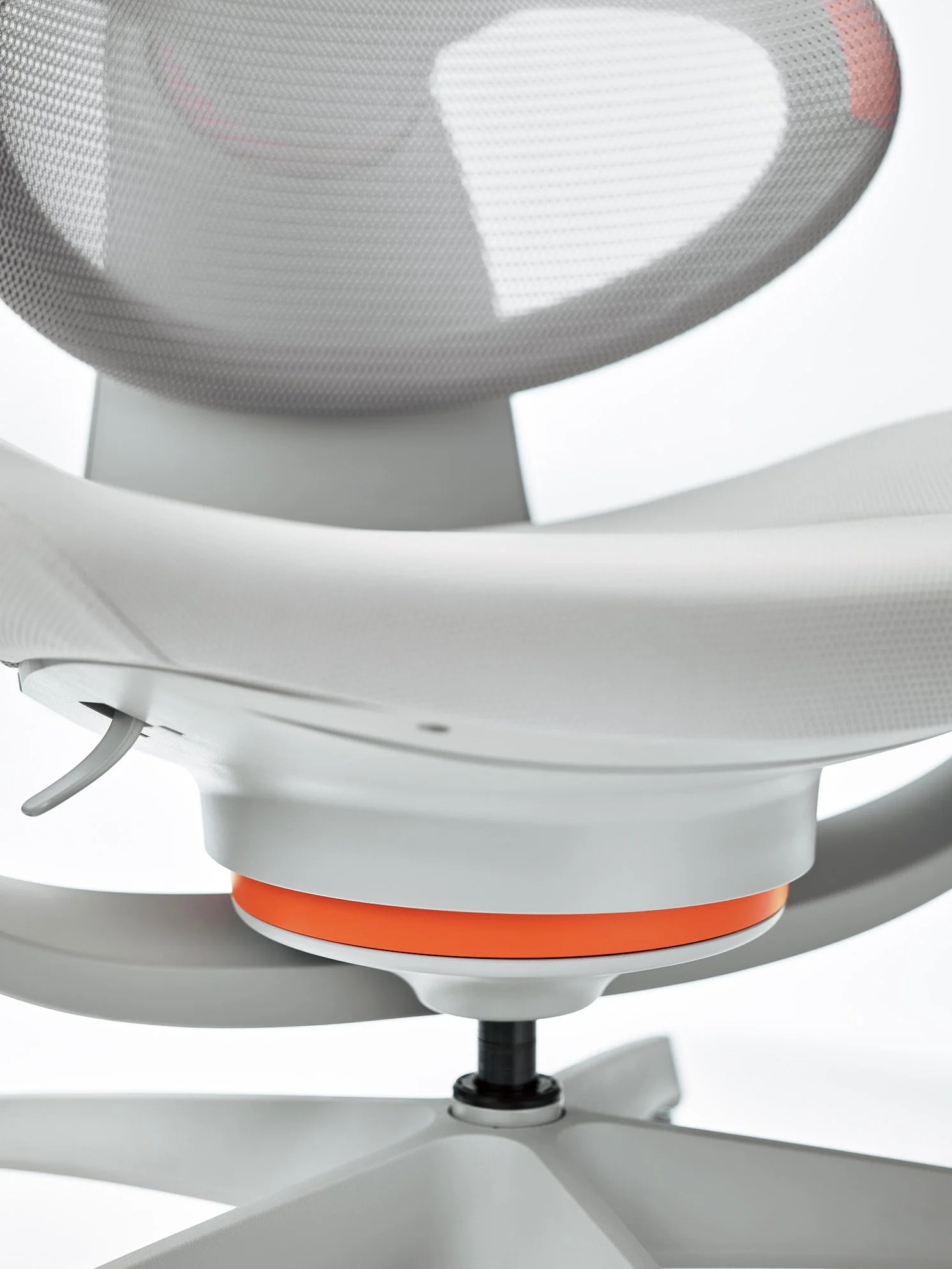
The Seat Axis: Moving smoothly across a multi-directional plane, the seat gliding catches deep, relaxed rear postures while tracking major forward leans and lateral shifts effortlessly. The range of motion can be customised into two distinct stages via a low-profile lever.
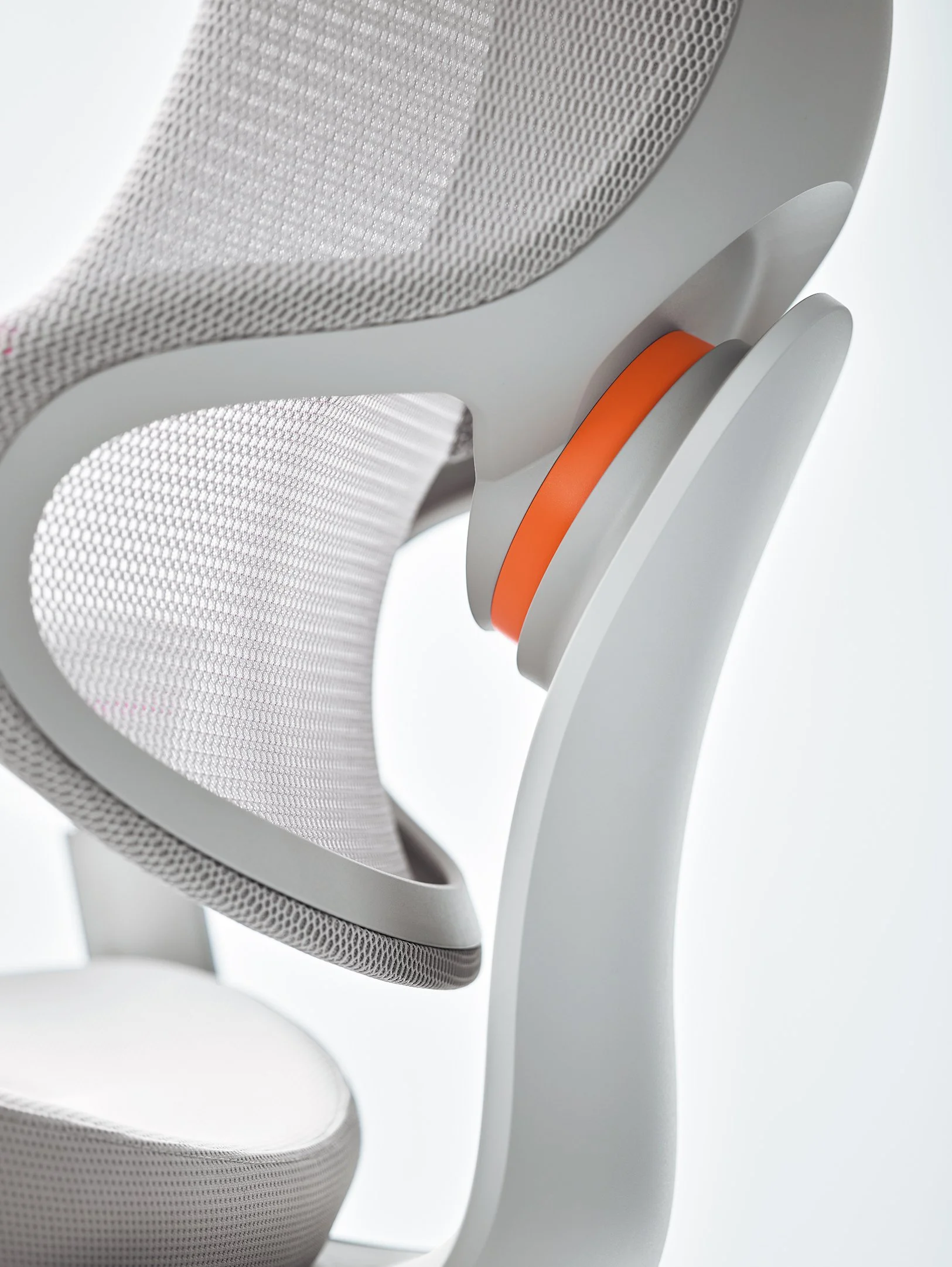
The Back Axis: Operating without springs, the backrest gliding responds instantly to the most microscopic micro-movements of the spine, providing continuous alignment.
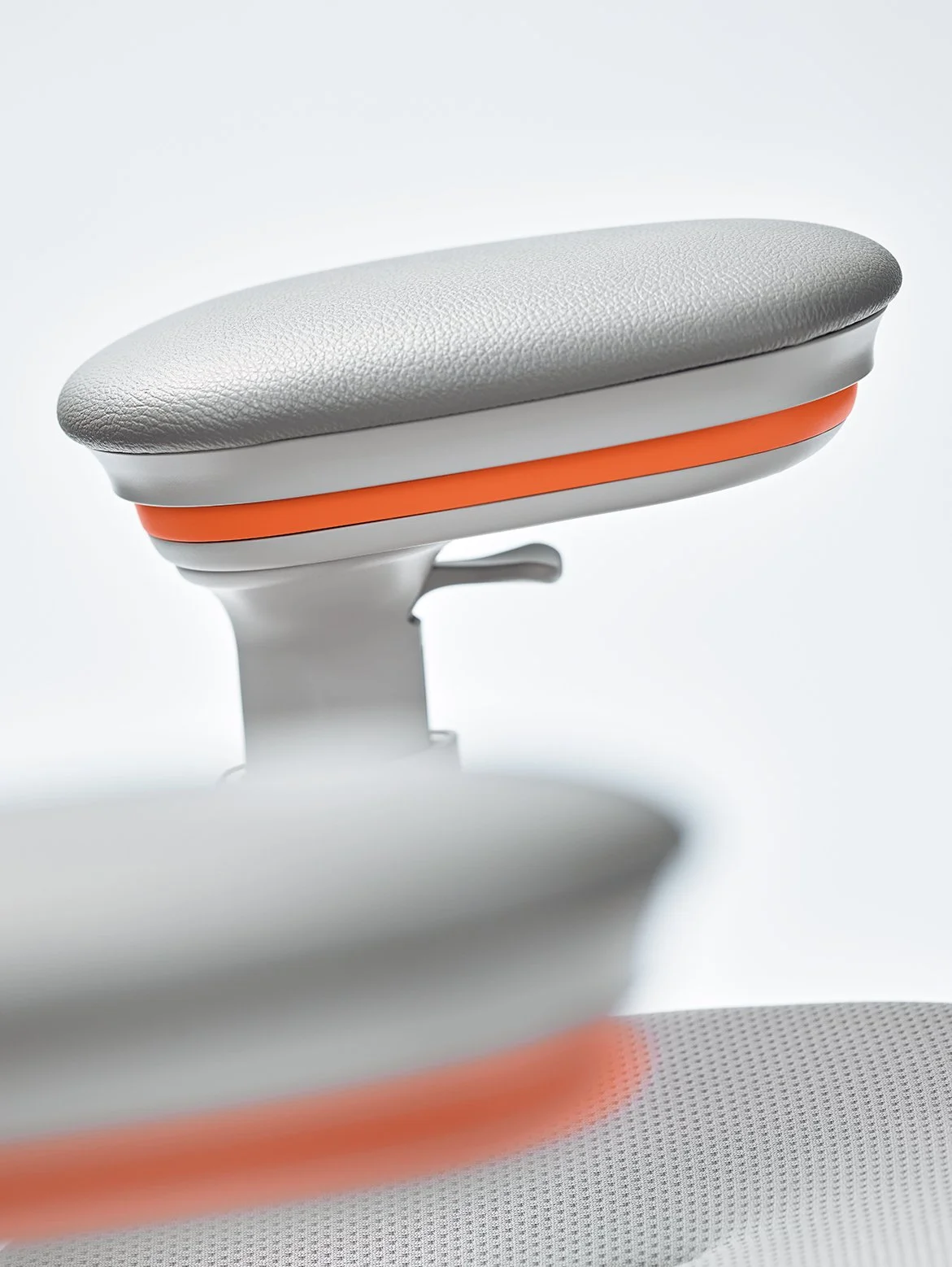
The Arm Axis: Suspended independently, the armrests glide into position automatically, softly supporting the forearms during typing without requiring manual intervention.
By utilizing gravity instead of mechanical resistance, the triple gliding system spreads body pressure over a significantly wider surface area. Pressure mapping data shows a dramatic reduction in peak load points compared to conventional task chairs, resulting in an overwhelming feeling of suspension that prevents physical fatigue.
The Frame Elimination and 3D Hammock Mesh
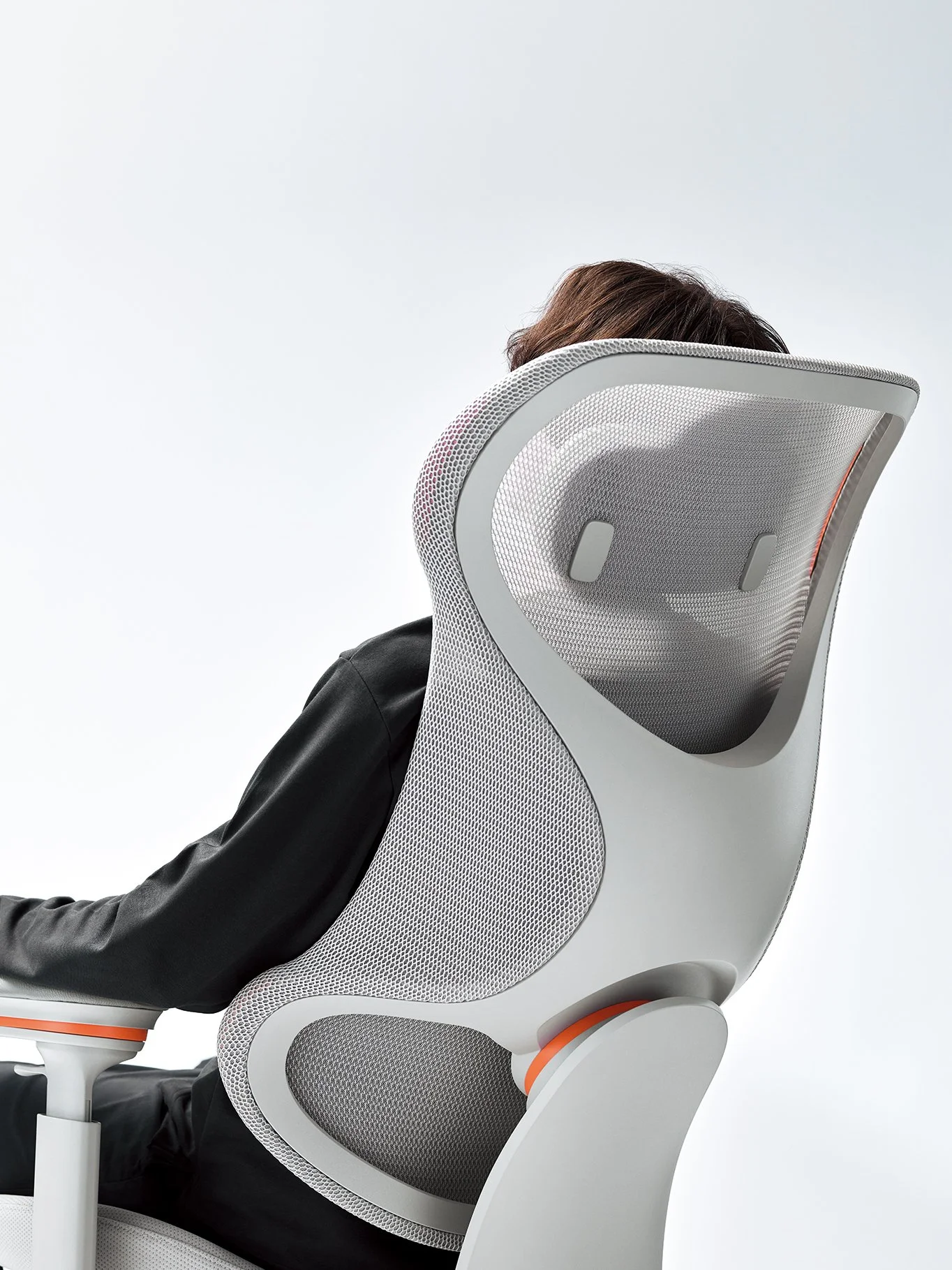
The structural narrative changes completely at the upper frame. Kokuyo has entirely removed the traditional rigid plastic or metal outer borders that typically outline a backrest.
In its place, a single panel of 3D hammock mesh shapes itself into a structural, three-dimensional curve. Because there are no hard vertical frame edges to encounter, the shoulders and arms are left entirely free to move, relieving tension across the upper back and chest. Meanwhile, the lower portion of the mesh wraps tightly from both sides, supporting the lumbar region naturally and maintaining the spine's natural S-curve without the visual or physical bulk of an aggressive lumbar pad.
Spatial Integrity in High-End Commercial Architecture
From a design perspective, high-performance office seating frequently introduces unwanted visual noise into a refined floor plan. They are often overwhelmed by heavy mechanical casings, exposed springs, and busy plastic shells that disrupt clean architectural sightlines.
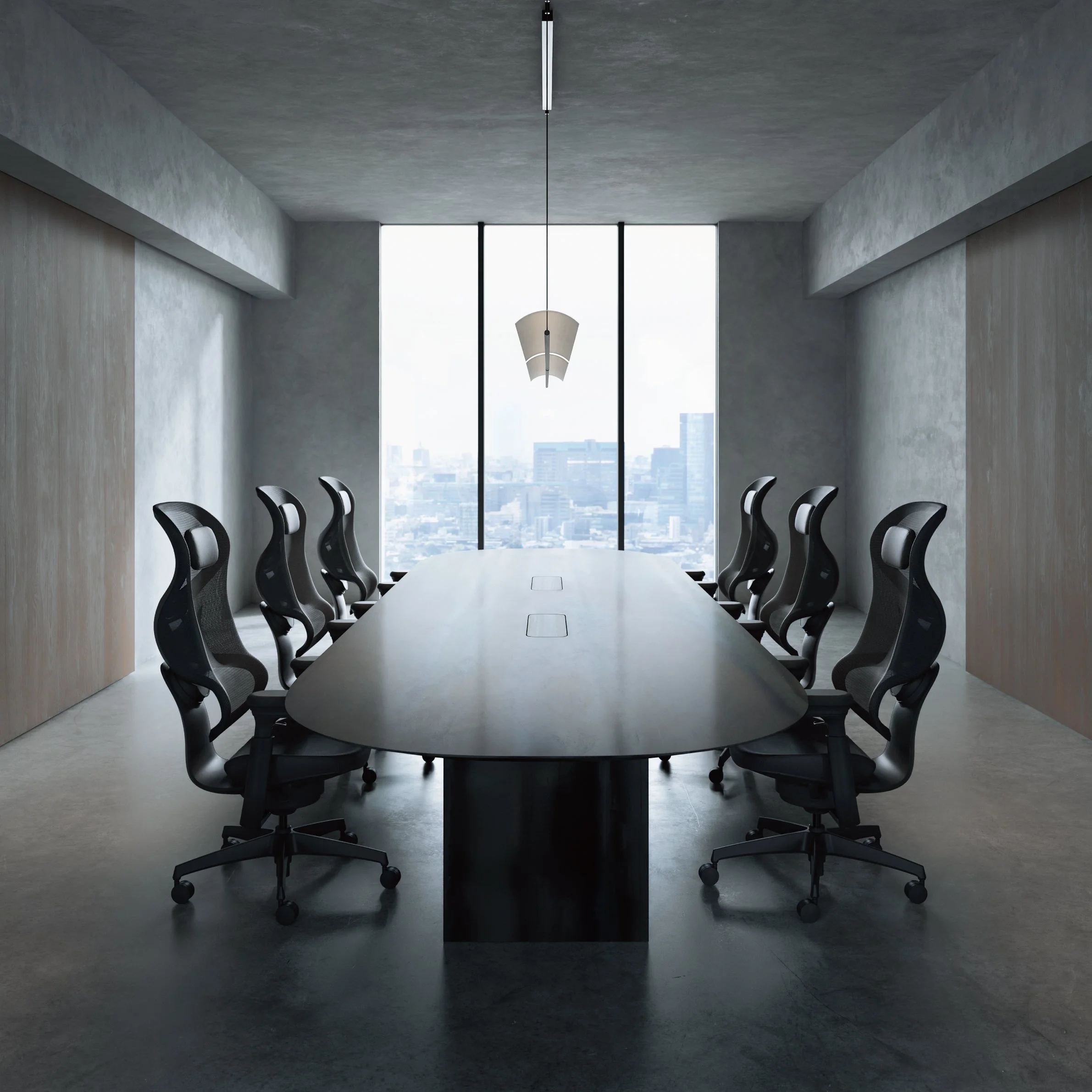
The ingCloud resolves this aesthetic tension by concealing its complex, multi-axis engineering within a quiet, streamlined form. The sweeping, organic lines of the mesh transition cleanly into a minimalist cast chassis, ensuring the chair sits comfortably within progressive corporate headquarters, executive boardrooms, and premium private home studies.
By treating OFFICE ERGONOMICS as an invisible, integrated benefit rather than an overt design feature, it allows architects and interior designers to specify world-class performance without compromising the aesthetic integrity of the space. It represents a mature synthesis of industrial innovation and understated luxury, tailored specifically for contemporary WORKPLACE DESIGN, high-end SPATIAL DESIGN, and progressive INTERIOR ARCHITECTURE.
Specification Services for Architects & Designers
The Kokuyo ingCloud collection introduces a highly disciplined aesthetic to corporate landscapes and private studies alike.
To integrate this award-winning technology into your upcoming interior schedules, please contact our Brisbane office. Our team provides complete technical dossiers, CAD blocks, and physical textile samples to streamline your documentation process for premium COMMERCIAL PROJECTS.